Choosing a print and apply labeller
Start with label size, print data, pack movement, speed, apply position and integration requirements.
Practical buying guidance for specifying barcode printer-applicators, pallet labellers and variable data labelling systems.
Start with label size, print data, pack movement, speed, apply position and integration requirements.
Plan one, two or three-side labelling, SSCC data, scan position, pallet handling and warehouse requirements.
Check barcode format, print resolution, quiet zones, verification and where data enters the label template.
Choose the applicator method based on product movement, placement tolerance and whether the label crosses two faces.
Confirm conveyor height, product spacing, sensors, air, power, guarding, HMI position and upstream data source.
Send pack dimensions, label artwork, roll details, speeds, utilities, photos or video of the line and barcode data format.
Use this checklist before requesting a quotation so the proposed labelling machine matches your real production line.
Confirm label size, label roll details, print resolution, barcode standard and variable fields.
Confirm product dimensions, label face, product movement, gap and stability on the conveyor.
Confirm data source, line speed, available space, conveyor height, power, air and operator access.
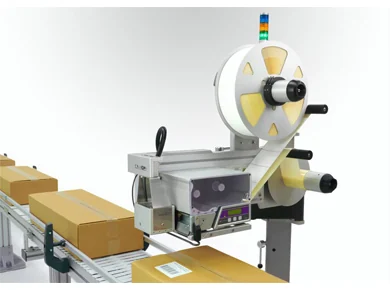
Detailed buying and integration guidance for higher-intent search terms.
A practical UK buying guide for print and apply labellers, covering label format, print data, applicator choice, line speed, controls and integration.
GuideGuide to choosing a pallet labelling machine for SSCC, GS1 and warehouse labels, including one, two and three-side print and apply systems.
GuideGuide to barcode label printer applicators for cases, cartons, trays and pallets, covering print quality, data flow, applicator type and scan position.
GuidePractical guide to GS1 and SSCC pallet labels for print and apply labelling, including barcode data, label placement and warehouse scan reliability.
GuideCompare tamp, wipe-on, blow and corner-wrap label applicators for print and apply labelling machines on cases, cartons, products and pallets.
GuideChecklist for integrating print and apply labelling machines with conveyors, PLC signals, scanners, databases and warehouse or production systems.
A clear trial plan and fault-handling sequence reduces ambiguity when print engines, applicators, scanners and line controls are combined.
Print quality and application accuracy cannot correct an incorrect source record or wrong template. The new guide separates ERP/WMS data ownership, approved artwork, job selection, handshakes, reprints and exception recovery.
Define field ownership, template versions, product association, retries, reprints and evidence for print-and-apply integration.
Translate the data design into triggers, status signals, timeouts, inspection results and line-control actions.
State what the finished-label inspection must prove and how the affected pack remains contained.
Use direct answers when one project decision needs more depth than a general buying guide.
Follow the complete sequence from pack detection to release.
ThroughputSeparate printer speed from mechanical and controls timing.
TroubleshootingDiagnose media, pack and applicator causes systematically.
CommercialCompare machine, integration, inspection and commissioning scope.
Use these guides to decide whether live printing is required and to specify the media that the printer-applicator must run.
Match barcode format and encoded data to the actual receiving process.
Keep the physical pallet, contents record and electronic despatch advice aligned.
Bind the correct accepted weight to the right case and printed label.
Compare direct printing and label application against the same case specification.