Compact footprint
Useful where conveyor space or access is limited.
Compact print and apply applicator for production lines that need variable data labelling in a smaller footprint.
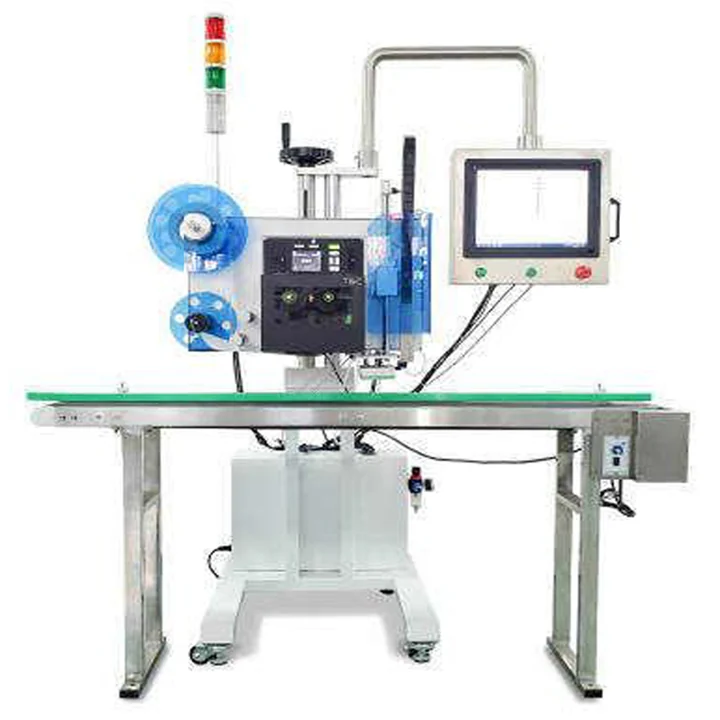
Configured around your label, pack format, line speed and data requirements.
Useful where conveyor space or access is limited.
Print barcodes, dates, batch numbers and product fields at the line.
Job selection, template control and diagnostics where specified.
Can be configured for stands, brackets or integrated conveyor stations.
Practical configuration for small to medium production environments.
Suitable for lines with multiple SKUs and label templates.
Final specification depends on label stock, print format, throughput and integration requirements.
| Machine format | Compact printer-applicator for line-side or conveyor-mounted use. |
|---|---|
| Print options | Thermal transfer or direct thermal print configuration subject to label stock. |
| Applicator | Tamp or wipe style applicators depending on product movement and placement. |
| Controls | HMI, sensor and I/O options to suit the line. |
| Utilities | Final electrical and compressed air requirements confirmed at quotation. |
Use print and apply labelling where variable data, barcode quality and consistent placement are required.
Flexible label templates for high-SKU production.
Variable data labels without large-line complexity.
Product, batch and barcode labels on cartons and cases.
A typical Lancing print and apply project can include the machine, controls, sensors and integration support needed to fit the system into your process.
Send the details below and Lancing UK can advise on the best format.
Share your label size, pack size, apply face, data source and target speed for a practical configuration review.
A compact arrangement should not compress the maintenance envelope or leave operators unable to load media and clear faults safely.
Include applicator movement, product variation, sensor position and the space needed to remove a failed label or pack.
Allow access to the printhead, platen, label path, ribbon, sensors and adjustment points with neighbouring equipment in place.
Define product spacing, data readiness and recovery after print or application faults so a small station does not become a line bottleneck.
Check the full operating and maintenance envelope, not only the machine footprint. Include door or guard movement, label and ribbon loading, applicator travel and operator access.
It can where the selected applicator, product control, speed and gap are suitable. The real line should be trialled or represented accurately.
Not necessarily, but the final print engine, controller and physical enclosure determine available interfaces and access.
Use approved templates and documented settings for label position, guides, sensors and product triggers.
A larger guarded station may be better where long reach, variable pack heights, verification, reject handling or frequent operator access needs more space.
It suits a controlled line where the label, pack face, applicator travel, service access and product range fit within the available footprint. Compact size does not remove the need for safe access and reliable product presentation.
It can when the mechanical range and changeover method support the full format matrix. Check sensor position, guide adjustment, label stock and applicator distance for every format.
Allow space to load labels and ribbon, clean the print path, inspect the applicator and reach service items safely. A small machine installed without access can create more downtime than the footprint saves.
A larger frame or guarded station may be preferable for long applicator travel, large labels, wide product variation, multi-face motion, complex inspection or substantial conveyor handling.