Barcode Verification & Reject Control
Plan what the inspection must prove and how the line contains a failed, missing or mismatched label.
Define what the inspection is intended to prove
Presence, readability, data correctness and barcode quality are four different requirements. Select the inspection method only after the required evidence and failure action have been agreed.
- Presence confirms that a label or expected feature is detected.
- Readability confirms that a scanner decodes the symbol in the tested presentation.
- Data match compares the decoded value with the expected record.
- Quality grading requires a defined standard, geometry and acceptance threshold.
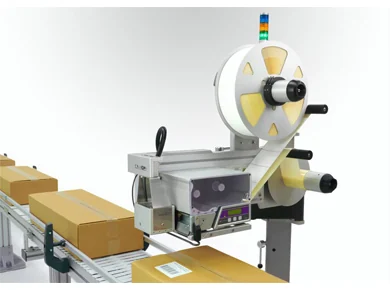
Build verification into the line sequence
The check must take place while there is still a controlled way to contain the affected pack.
Establish the expected identity
Link the pack, case or pallet to the record that should appear on the label.
Inspect the finished result
Position the scanner or inspection device to assess the applied label at representative speed, distance, angle and presentation.
Compare against the stated requirement
Apply the correct criterion: presence, decode, data match or documented quality threshold.
Contain and recover
Stop, reject or quarantine the affected pack, then use an authorised recovery process that preserves identity and prevents duplicates.
Acceptance checks
| Good label | Approved label, expected data and representative pack presentation pass the defined inspection. |
|---|---|
| Poor print | Introduce a controlled print defect and confirm the intended detection and containment response. |
| Wrong data | Where data match is required, prove that readable but unexpected data does not pass. |
| Missing or misplaced label | Confirm the result at the practical limits of placement and presentation. |
| Recovery | Prove the operator can identify the affected pack and complete a controlled reprint or disposition. |
Questions buyers ask
Use these answers to make the machine trial and controls scope more explicit.
Is a barcode reader the same as a barcode verifier?
No. A reader confirms that it can decode the symbol under its conditions. A verifier applies a defined quality assessment and test geometry. The project should state which result is required.
Should the scanner be before or after label application?
A pre-application check can inspect the printed label, while a post-application check assesses the finished pack presentation. The correct point depends on what the check must prove.
How should a failed label be handled?
Use a documented stop, reject or quarantine sequence that keeps the affected pack identified and prevents uncontrolled reprinting or duplicate labels.
Can the decoded barcode be compared with ERP data?
Yes, where the expected record is available at the correct time and the interface, comparison and failure response are defined and tested.
What evidence should be retained?
Retain the approved test condition, expected data, decoded or graded result, failed-pack response and any production record required by the customer process.
Turn the guidance into a project-specific test
Send the label, representative packs, line video, data source and required acceptance evidence to Lancing UK.
What should be checked after a label has been printed and applied?
Confirm that the printed data belongs to the correct pack, that the label is in the agreed position and that the code meets the required checks. A successful print command does not prove successful application. Specify any inspection, verification, rejection and reprint controls separately as part of the line scope.
- Data-to-pack association
- Applied position and code checks
- Reject and reprint controls
Related guidance: Print & apply labelling machines · Integration checklist