Surface and cleaning
Plastic type, texture, mould-release residue, condensation, dust, wash chemicals and surface damage can change adhesion. Test clean, worn and worst-normal containers after the real cleaning and temperature sequence.
Design the temporary label around the container identity, reuse cycle, surface, cleaning process, scan life and old-label control.
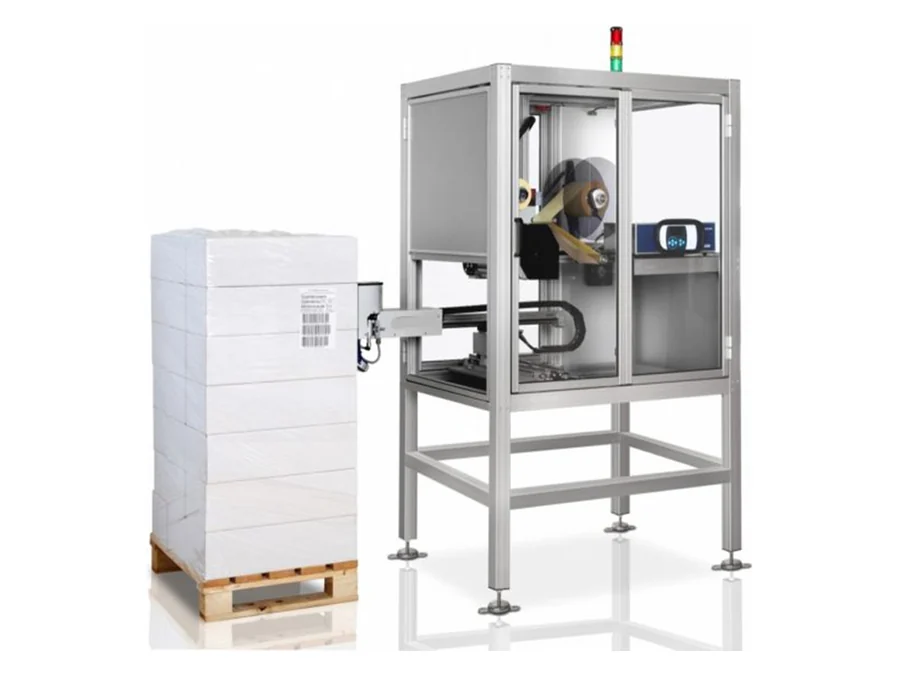
Reusable totes, crates and containers often need a permanent asset identity plus a temporary route, order or contents label that changes each cycle. Print and apply can create the temporary record automatically, but the label material, adhesive, position and removal process must be designed around reuse, cleaning, old-label control and the required scan life.
| Identity | Purpose | Control question |
|---|---|---|
| Permanent container identity | Identifies the tote, crate or asset across repeated trips and may be printed, moulded, engraved, labelled or carried by another approved technology. | How is the asset uniquely recognised if the temporary label is missing? |
| Temporary operational label | Associates the container with current contents, order, route, destination, batch or process status. | When does the record become active, and how is it retired after the cycle? |
Plastic type, texture, mould-release residue, condensation, dust, wash chemicals and surface damage can change adhesion. Test clean, worn and worst-normal containers after the real cleaning and temperature sequence.
If labels must be removed, define who removes them, at what point, how residue is accepted and how a missed old label is detected. A removable label that falls off during the route is not a successful solution.
Choose a protected, repeatable face that remains visible to scanners but is not scraped by conveyors, nesting, stacking, lids, handling equipment or adjacent containers.
Old barcodes can create ambiguous scans even when the new label is correct. The process may need a dedicated label zone, removal check, cover-over rule or scanner logic that distinguishes the active record.
Record the full size and height matrix. The system must detect the correct application face, reach it safely and complete the cycle within the available gap without unstable contact.
Define what happens when a container returns with a damaged, unreadable or still-active label. Recovery should update the data record as well as the physical label state.
Include new, worn, scratched and worst-normal totes across the complete size range, plus examples after cleaning or cold storage where those conditions apply.
State how long the temporary label must remain readable, the handling it will receive and the exact point at which it should be removed or invalidated.
Print, apply, scan, convey, stack, store, handle, clean and remove the label as the operation would. A short application test alone cannot prove the reuse process.
Deliberately present a tote with an old visible label and prove the intended detection, removal, covering or data rule.
Agree label position, adhesion, scan result, removal behaviour, residue limit, rework method and operator checks for each format.
That depends on whether the label identifies the asset or only the current journey. Permanent identity should survive the defined life of the container; temporary information must remain secure for the journey but have a controlled end-of-life process.
Only if the process guarantees that the old code is fully obscured, the stack remains within adhesion limits and the buildup does not affect handling. Repeated covering without a limit can create loose edges and ambiguous scanning.
Yes. A permanent asset identifier and a temporary printed operational label can serve different purposes. The system design must define which record is authoritative at each process step and how discrepancies are handled.
Send representative new and used containers, final label construction, cleaning information, application position, stacking/nesting evidence, line video, barcode requirements and the expected removal or reuse sequence.
Lancing can review tote samples, label construction, data life, cleaning, handling and old-label control before a machine route is fixed.